Air Dried vs Kiln Dried Oak, and Why We Air Dry
Timber can be dried two ways, in a kiln or in the air, and the two behave differently in the piece you build. Here is the difference, and why we air dry.
What kiln drying does
A kiln forces moisture out with heat over days or weeks, taking the timber down to around 8 to 12 percent. It is quick and gives a low, even moisture content, which suits mass-produced furniture and indoor joinery in heated rooms. The speed comes at a cost: the heat can case-harden the surface, dull the colour and take some of the life out of the grain.
What air drying does
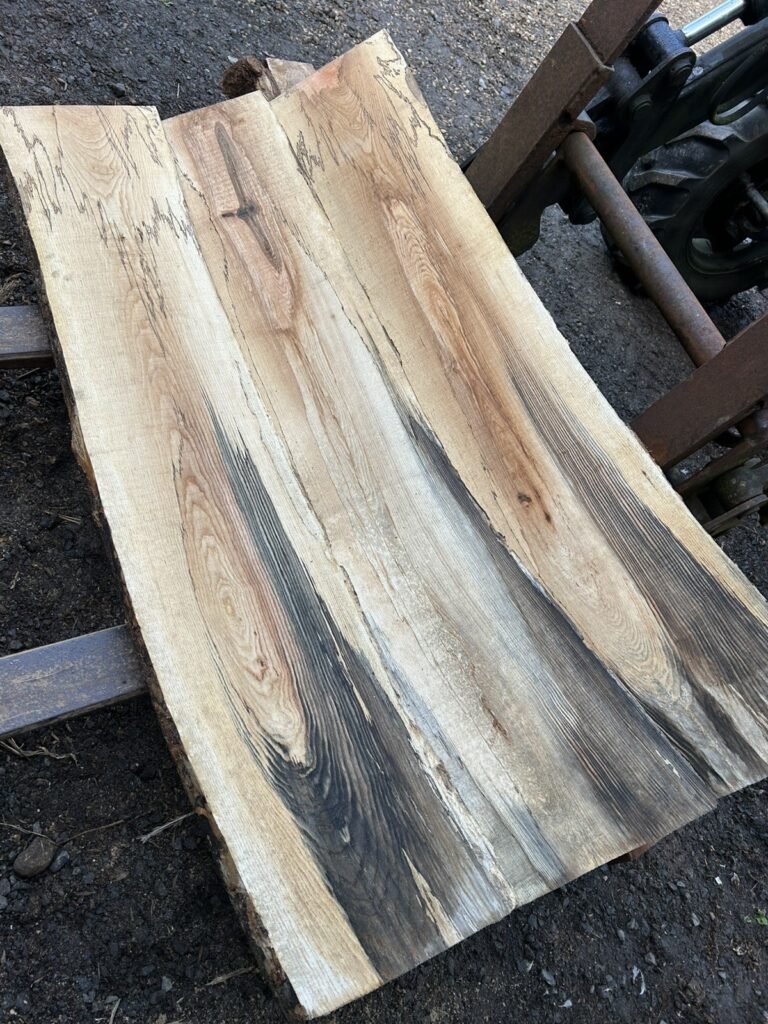
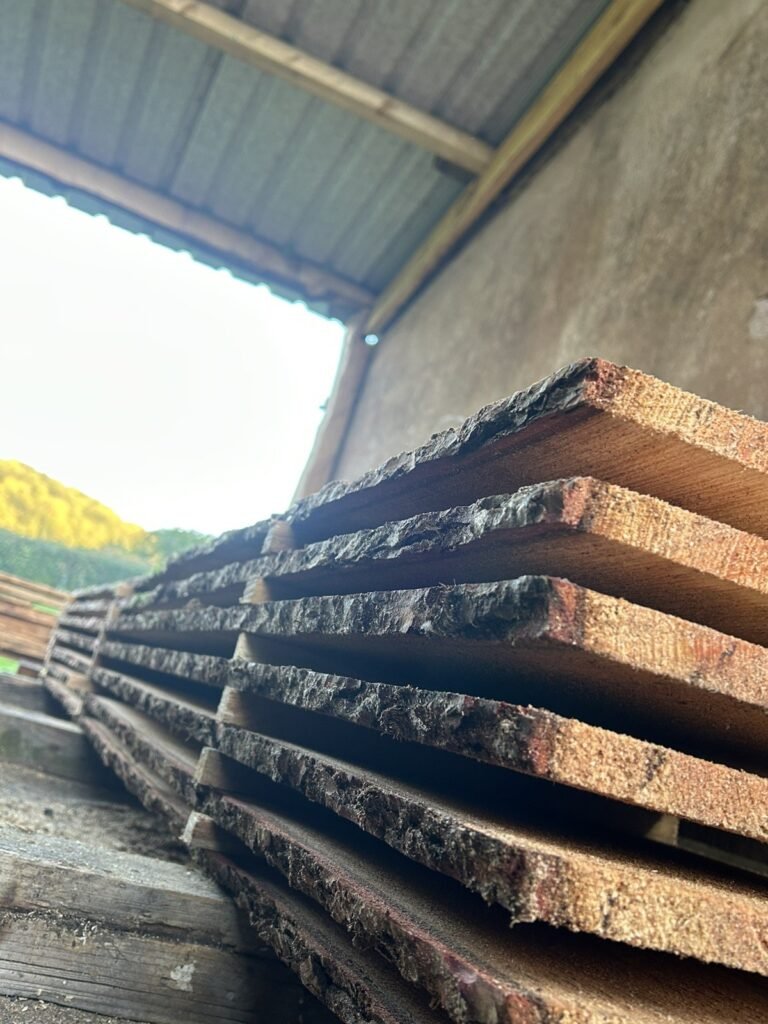
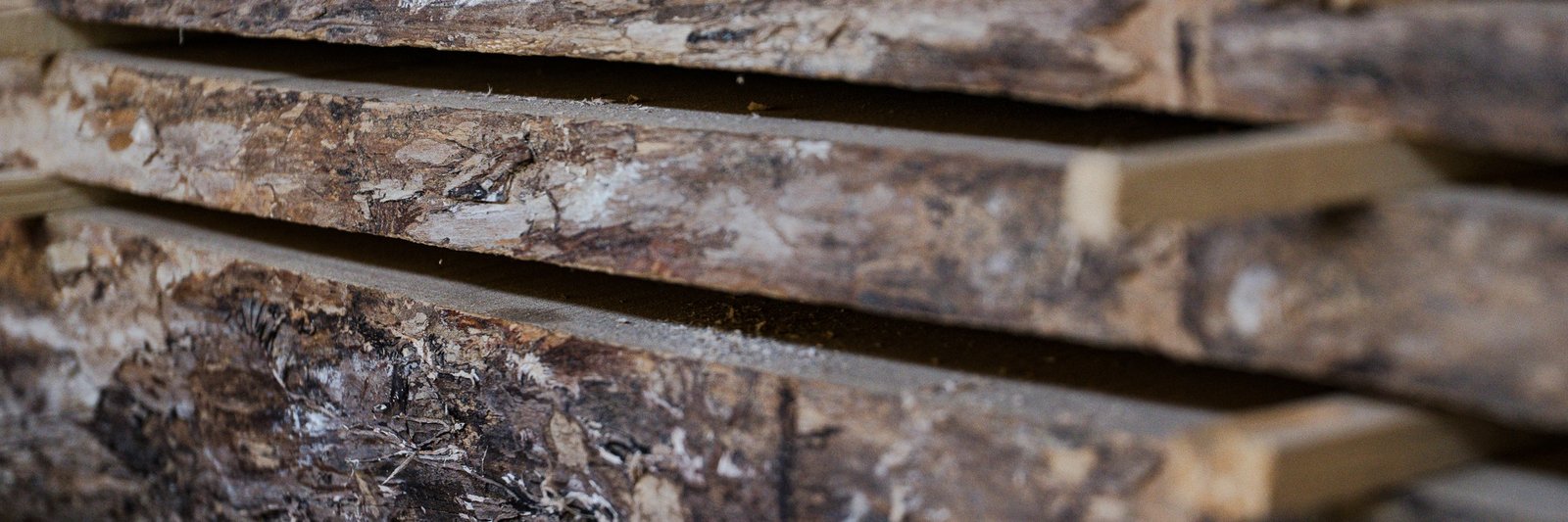
Air drying stacks the boards in stick, with spacers between them, and lets the weather do the work. The timber dries slowly and settles at around 16 to 20 percent, in balance with the outdoor air. It keeps its colour and figure, and because it has dried gently it is less stressed and moves in a way you can predict.
Why we air dry
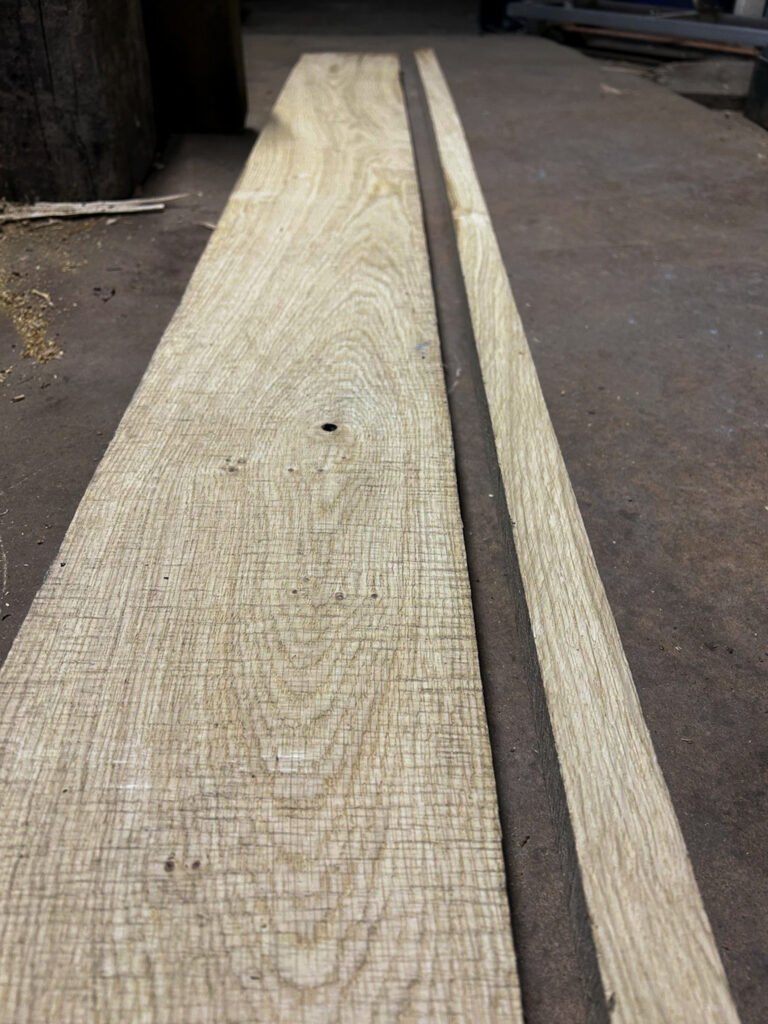
Our oak is Devon hardwood, milled here and stacked to dry the old way. For traditional building, oak framing and furniture that lives in a normal room rather than a hot flat, air-dried oak is the honest choice. It behaves like oak should, and the grain is all there to see.
A note on moisture
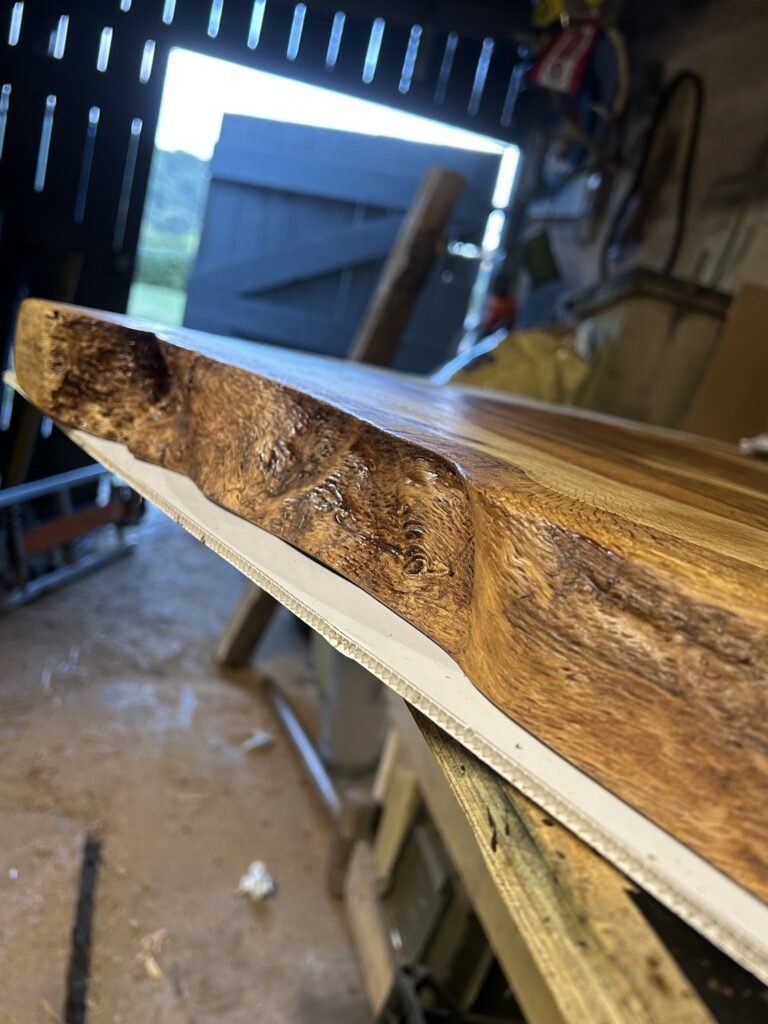
Air-dried timber is not dry enough to go straight into a heated room and stay still. Bring it indoors and let it acclimatise for a few weeks before you build, so it reaches the moisture level of where it will live. For a resin pour or a fine tabletop, many makers take it lower again first.
Rule of thumb
Oak dries at roughly an inch of thickness a year in the air. A thick slab takes time, so if you need a big section ready to work, order ahead. Tell us what you are building and we will tell you the moisture content of any board, and whether it is ready for your job or wants a little longer.