How to Finish and Care for a Live-Edge Oak Slab
A live-edge oak slab makes a table, a shelf or a worktop that lasts for decades, if you prepare and finish it right. Here is how.
Let it settle first
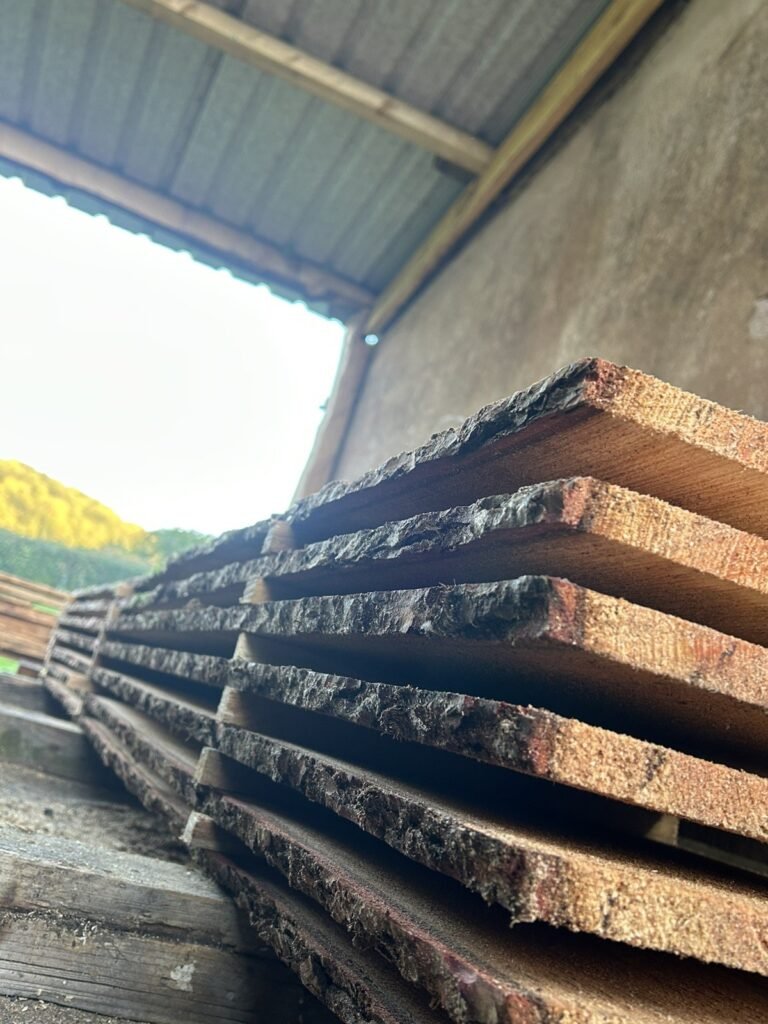
Oak moves as it reaches the moisture level of the room. Bring your slab indoors and leave it flat, off the floor, for a few weeks before you work it. This is the single biggest thing people skip, and it is why tops cup later.
Flatten and sand
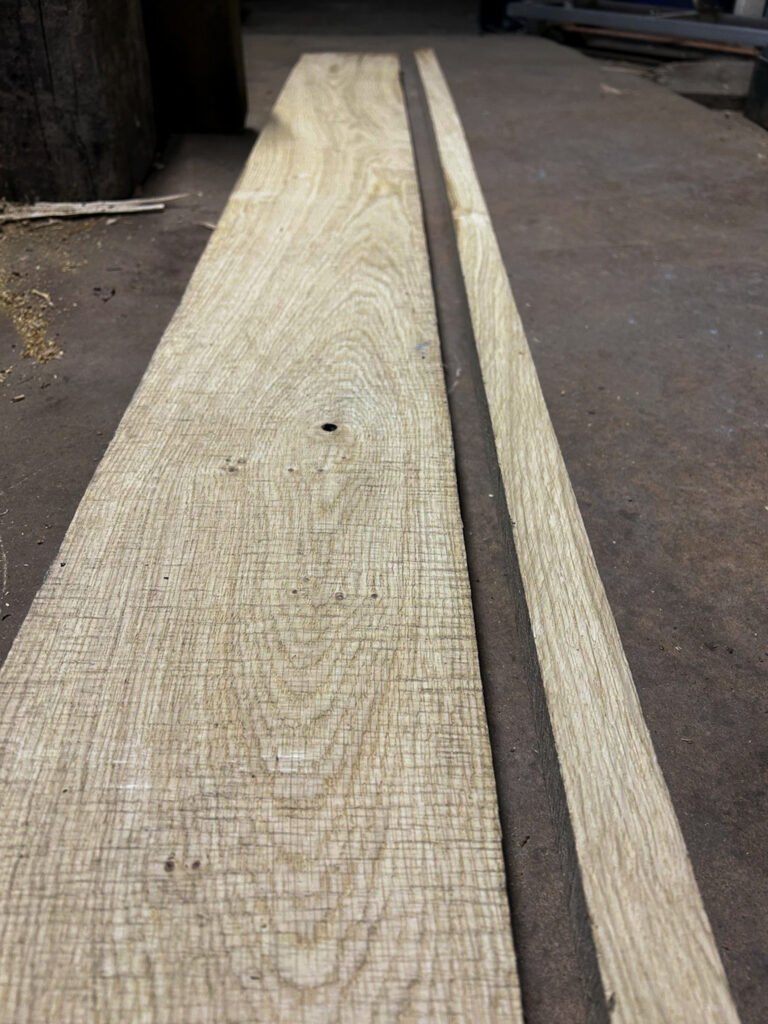
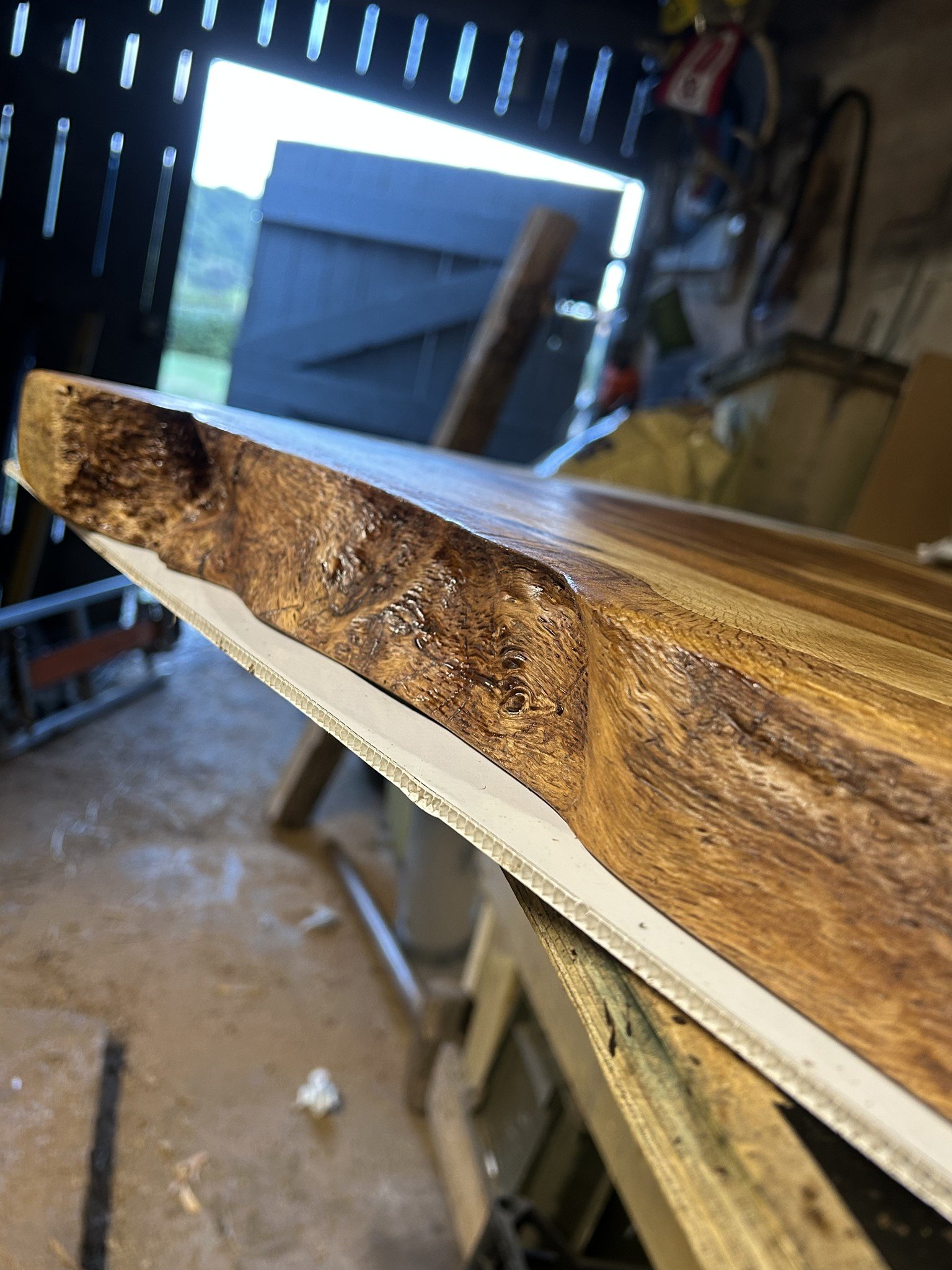
A roughsawn slab needs flattening on both faces, by hand with a router sled or on a machine. Then work up through the grits, 80 to 120 to 180, and finish at 240 for an oiled surface. Keep the waney edge, clean off the loose bark, and soften the sharp edge so it feels good to the hand.
Fill the cracks, if you want to
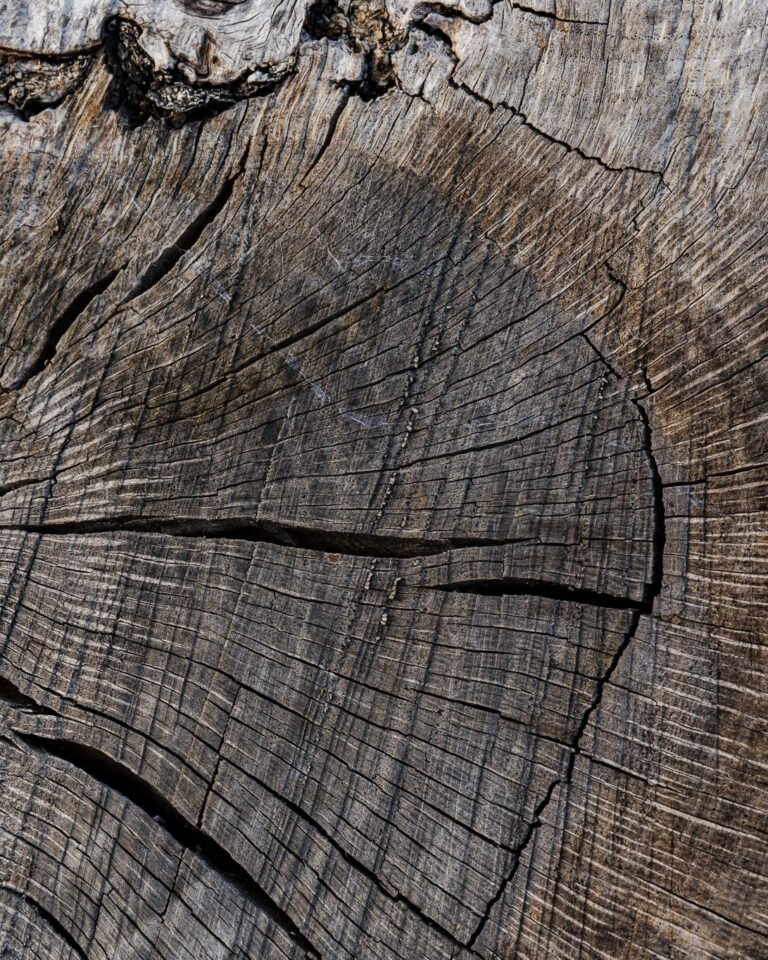
Oak often has small shakes and checks. Leave them for character, or fill with clear or tinted resin for a smooth top. If you fill, do it before final sanding.
Choose a finish
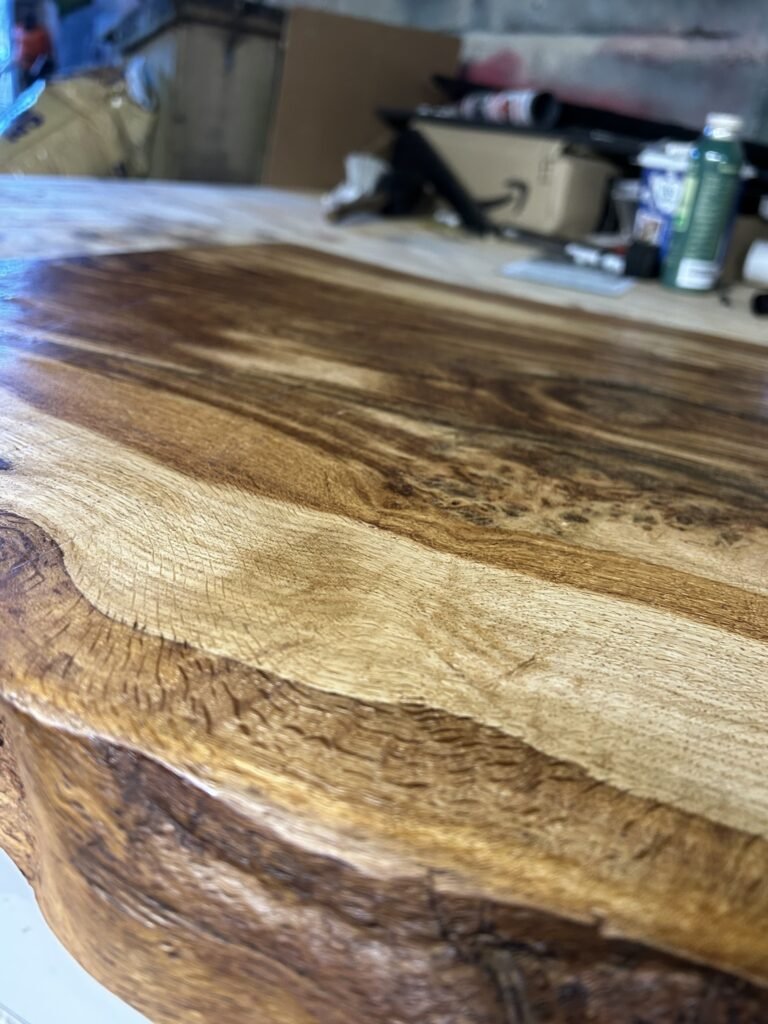
For a table or shelf, a hardwax oil is the usual choice: it soaks in, shows the grain and is easy to repair. For a kitchen worktop, use a food-safe hardwax or worktop oil and give it several coats. Oil, leave it, wipe back the excess, repeat. Avoid thick film varnishes on oak; when they chip they are a job to put right.
Keep it
Wipe spills, do not leave water standing, and re-oil a worktop once or twice a year or when it looks dry. An oiled oak top only gets better with handling.
Buying the slab
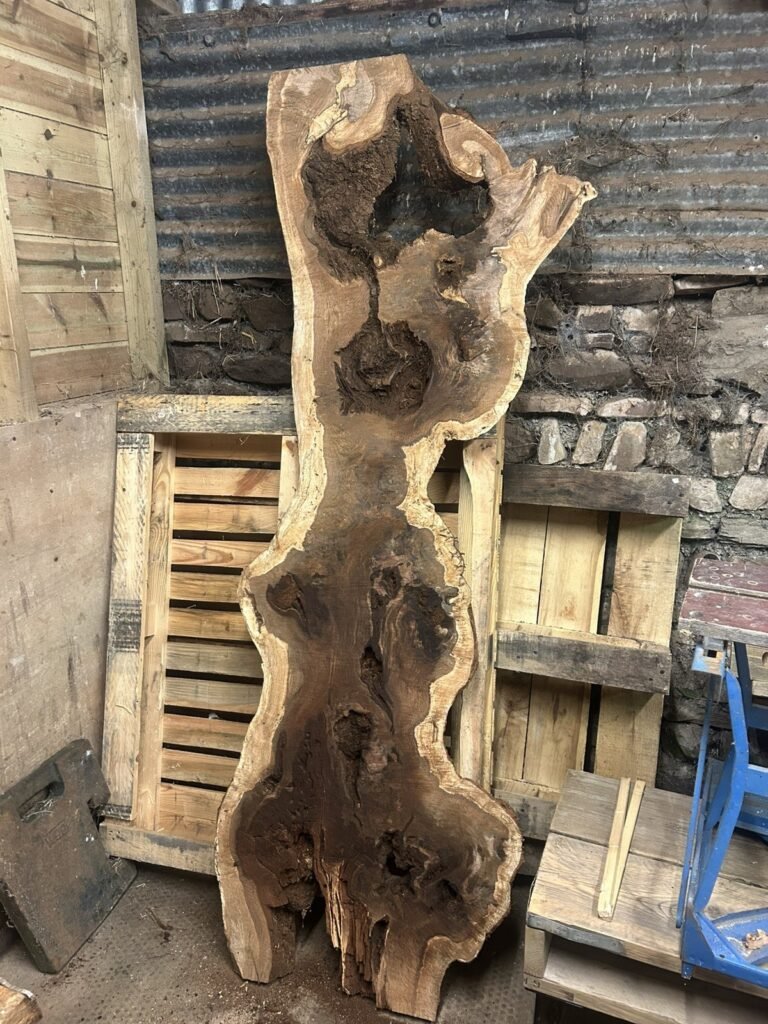
Order thicker than your finished top to allow for flattening, and ask us the moisture content so you know how long to let it settle. Every slab is one of one, so tell us the size and look you want and we will cut from the right log.